Re-Inventing the Midslope: Diversifying Cultivation Through Collaborative Farming TechnologiesCatherine Cibeira Lachmann, Eunsol Jo, and Iliade Sakr
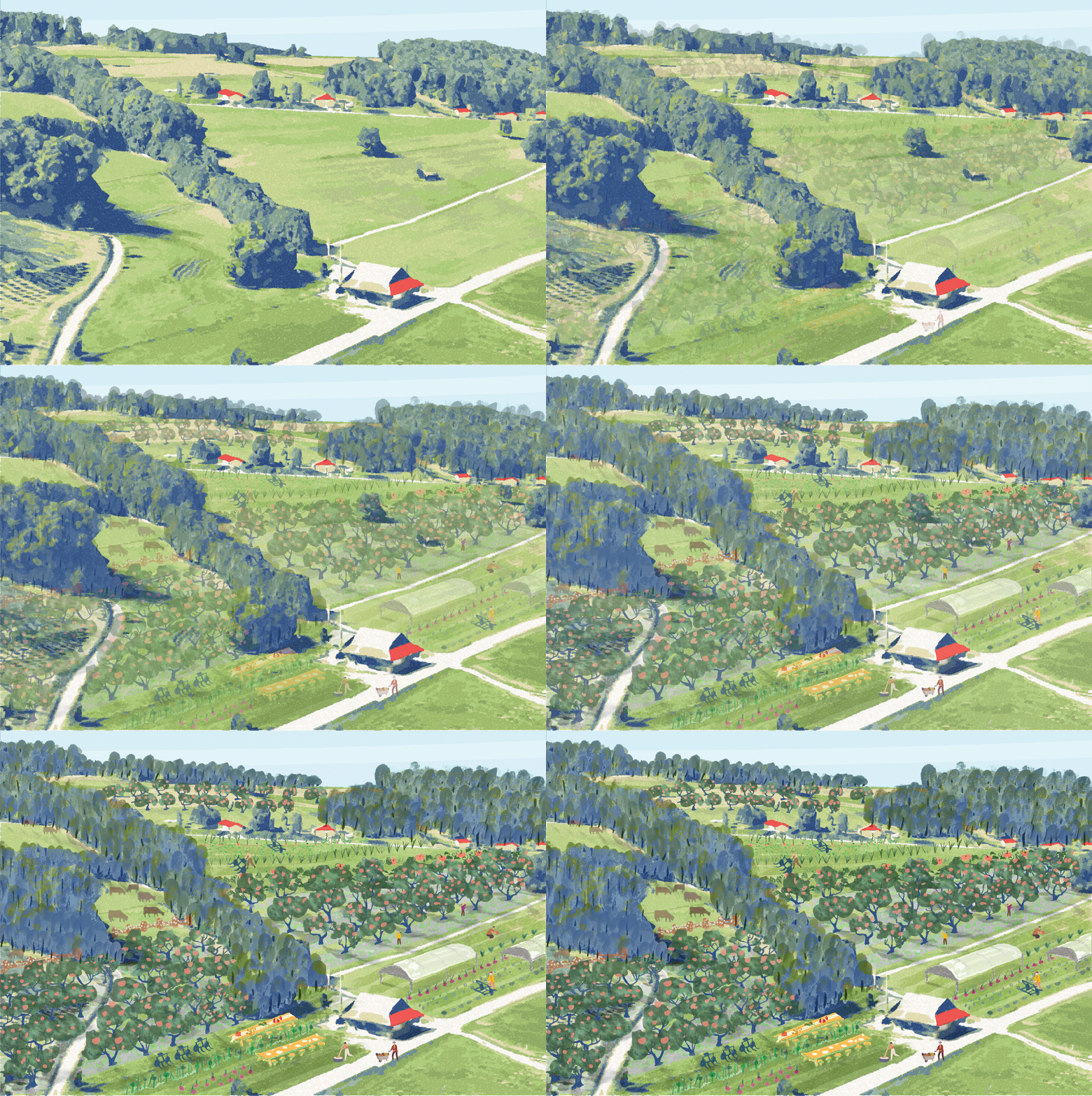
The terrains of Bonstetten-Wettswil am Albis, there lies the green slopes composed of forgotten orchards, erased cultivation practices, and traces of a landscape once shaped by human care. Specifically the area with slopes between 18 and 35 percent, is defined by the project as the Midslope. As labor-intensive cultivation declined, large portions of the midslope were progressively converted into low-maintenance fodder grass and grazing meadows, reducing both agricultural diversity and everyday interaction with the land. Long neglected as a mere leftover transition zone between urban infrastructure and protected forests, establishing the midslope as a distinct category serves as a conscious spatial act to treat this underused, ecologically mute silent green as a critical socio-ecological threshold that demands its own tailored framework of care and new social contracts. To dismantle the homogenisation driven by industrial fodder production, the design resurrects traditional patch-working agricultural practices that embrace the hillside’s inherent fragmentation caused by topography and ecological variation, to reconstruct a productive and interconnected ecological mosaic -a diverse landscape of patchworked slopes, including small-scale agricultural fields, biodiversity areas, woods, lakes and wetlands- that vertically stitches together hilltop forests and low-lying drainage valleys.
The project overcomes the chronic labour intensity of steep-slope farming through context-aware, slope-adapted, small-scale technology. Crucially, these robotic mechanisms are deployed not to accelerate extractivist yields, but to act as a structural liberator. By absorbing the harshest physical burdens, technology buys back time for the landscape, clearing physical space for high-care manual labour. Technology thus serves as a thoughtful mediator that brings people back to the land, restoring the lost intimacy between human and hill.
This revived patchwork mosaic operates as a sanctuary for multi-layered care, preserving endangered heritage fruit varieties through integrated silvopasture and companion intercropping. This matrix extends to the valley boundary, an agrarian hearth where newly arrived multi-cultural communities cultivate and exchange diverse diasporal crops, moringa tree, chili, and cacao. Ultimately, the project establishes a reciprocal web of care between humans, machines, animals, and the land, fostering a pluralistic food system rooted in collective slowness.